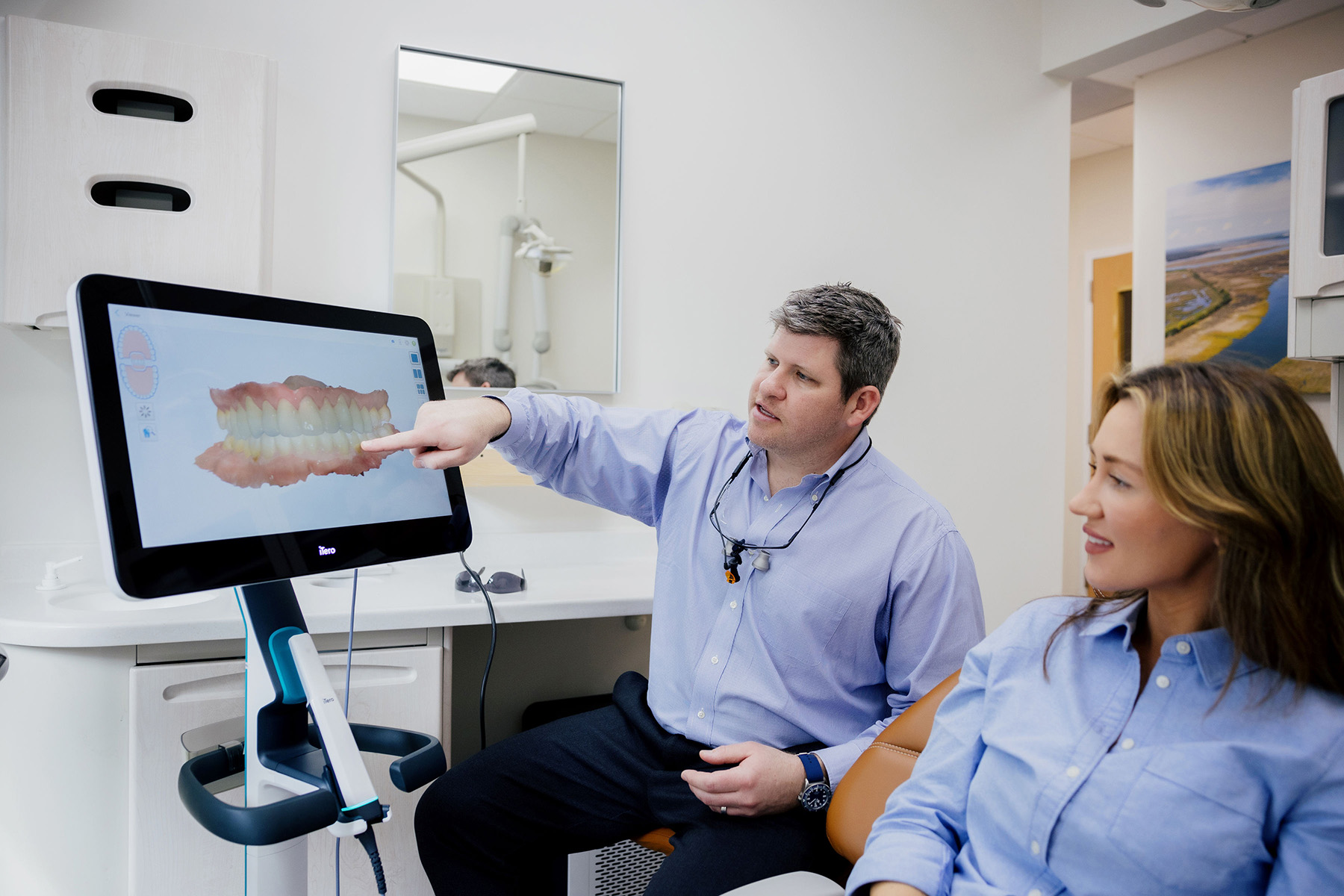


Smile Restoration With Dental Implants
Enjoy A Stable, Natural, And Low-Maintenance Smile
Whether you’ve lost one tooth or most of your teeth, dental implants offer a long-lasting, natural-looking solution. At Dental Wellness, Dr. Douglas Walker combines advanced technology with a patient-focused approach to restore both function and confidence in your smile.
What Are Dental Implants?
Dental implants are small, screw-shaped titanium posts that replace the roots of missing teeth. They are placed into the jawbone, where they naturally fuse with your bone through a process called osseointegration.
Once healed, implants act as a stable foundation for crowns, bridges, or full-arch restorations.
How Dental Implants Work
- Implant Placement – A dental implant is placed in the jawbone
- Healing & Integration – The implant bonds with your bone over time
- Restoration – A custom crown, bridge, or denture is attached
This process creates a secure, long-term solution that looks and feels like a natural tooth.
Guided Implant Surgery
At Dental Wellness, we use guided implant technology to plan your treatment with precision.
This approach allows Dr. Walker to:
- Place implants with greater accuracy
- Minimize discomfort and recovery time
- Improve long-term outcomes
Guided surgery ensures your treatment is efficient, predictable, and tailored specifically to your anatomy.
Implant Restorations
Once your implant has healed, it’s restored with a custom-designed prosthetic. Depending on your needs, this may include:
- Dental crowns for single missing teeth
- Implant-supported bridges for multiple teeth
- Full-arch restorations for complete smile replacement
Each restoration is crafted to match your natural teeth for seamless aesthetics and function.
Implant-Supported Dentures
Implant-supported dentures offer a more secure alternative to traditional removable dentures.
Instead of resting on the gums, these dentures are anchored to dental implants, providing:
- Improved stability
- Better chewing ability
- Reduced slipping or movement
They can be removable or fixed depending on your preferences and treatment plan.
All-On-4 Dental Implants
All-On-4 is a full-arch restoration that uses just four strategically placed implants to support a complete set of teeth.
This option is ideal for patients with significant tooth loss and offers:
- A permanent, non-removable solution
- Fewer implants required
- Faster transformation with temporary teeth often placed the same day
Bone Replacement & Grafting
In some cases, patients may not have enough healthy bone to support dental implants.
We offer bone grafting procedures to rebuild and strengthen the jawbone, creating a stable foundation for implants. This allows more patients to become candidates for long-term implant success.
Benefits Of Dental Implants
- Long-lasting – Can last decades with proper care
- Low maintenance – Brush and floss like natural teeth
- Strong & stable – No slipping or shifting
- Supports oral health – Prevents bone loss and tooth movement
What To Expect During Treatment
Dental implant treatment typically takes several months to complete, allowing time for proper healing and integration.
However, for full-arch cases like All-On-4, temporary teeth can often be placed much sooner—so you can smile confidently throughout the process.
Frequently Asked Questions
Can I keep any teeth with All-On-4 or implant-supported dentures?
These treatments are typically recommended for patients who have lost most or all of their teeth. However, if you still have healthy teeth, alternative implant options may be available.
Does insurance cover dental implants?
Coverage varies by plan. While implants themselves are often not fully covered, some related procedures may be. Our team can help you explore financing options.
How long do dental implants take?
Most cases take 6–9 months from start to finish, depending on healing time and whether additional procedures like bone grafting are needed.

Contact us
Reach out to discover what our integrated wellness approach can do for you and your smile.